
Featured Work
AAF NSAC NFL CAMPAGIN
Plans Book
The National Student Advertising Competition (NSAC), hosted by the American Advertising Federation (AAF), is a collegiate advertising competition that challenges students to develop a fully integrated marketing campaign for a real-world client. As part of DePaul University's NSAC team, I collaborated with peers to conduct extensive market research, analyze consumer insights, develop strategic recommendations, and create advertising and public relations materials tailored to the client's objectives. The project culminated in a professional campaign book and a formal presentation delivered to a panel of industry judges, providing hands-on experience in strategic planning, creative development, teamwork, and client-focused communication.
Presentation
Anthem & Ad Spot
Campaign Visualizer
Creative Executions

Buy Now, Question Later: A Case Study on Klarna X OpenAI’s Customer Service Program
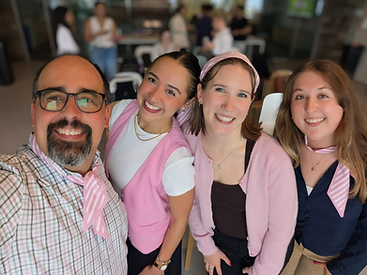
This is a case study on Klarna X OpenAI's customer service program, which will be submitted for the IPR + Page Case Study Competition as well as for PRAD564: Business Skills for Strategic Communicators with Professor Matt Ragas. It covers the company's background and origins, market trends, financial analysis, situational analysis, responses from key stakeholders, and an evaluation based on the Page Principles. This was developed in collaboration with Delila Moreno, Amber Mouton, and Anna Withrow. Our case study placed first out of the class, judged by a panel of judges from Zeno Group.

Your first place team after presenting at Zeno!
_edited.png)
Customer Perception and Brand Reputation:
A Research Study on American Airlines
This is a comprehensive research report on American Airlines conducted for PRAD585: Reseach, Data, and Insights with Professor Couto. The report includes,
-
Client Background & Organizational Profile
-
Secondary Research & Media Landscape
-
Problem Statement
-
Construct Development
-
Methodology: Sampling & Instruments
-
Sampling Plan
-
Survey Development
-
Interview Protocol
-
-
Analysis Plan
-
Conclusion & Implications
-
Appendices
and more. This report was made in collaboration with Federica Flore, Gulrukhn Ahmad, and Peyton Scott.
Community Activation Campagin
For this project, I served as Project Manager for the Community Activation team to develop strategies that increased Josephinum Academy’s local visibility and community engagement. We designed a multi-faceted campaign, including events showcasing students' work, programming, and a student-run magazine highlighting student voices and achievements for distribution in the Wicker Park community. Through audience research, program planning, and strategic partnerships, the campaign demonstrated how creative activations can strengthen community connections, highlight student leadership and artistic growth, and support enrollment goals.
In this narrative, I reflect on my time in Venice and explore how a city designed for pedestrians, rather than cars, shapes community, human connection, and daily life. I examine how car-centric cities in the U.S. prioritize efficiency over community, and what lessons might be drawn from Venice’s human-centered urban design. This piece demonstrates my ability to combine descriptive storytelling with research and analysis, creating a compelling narrative that engages readers while exploring broader social and urban issues.
